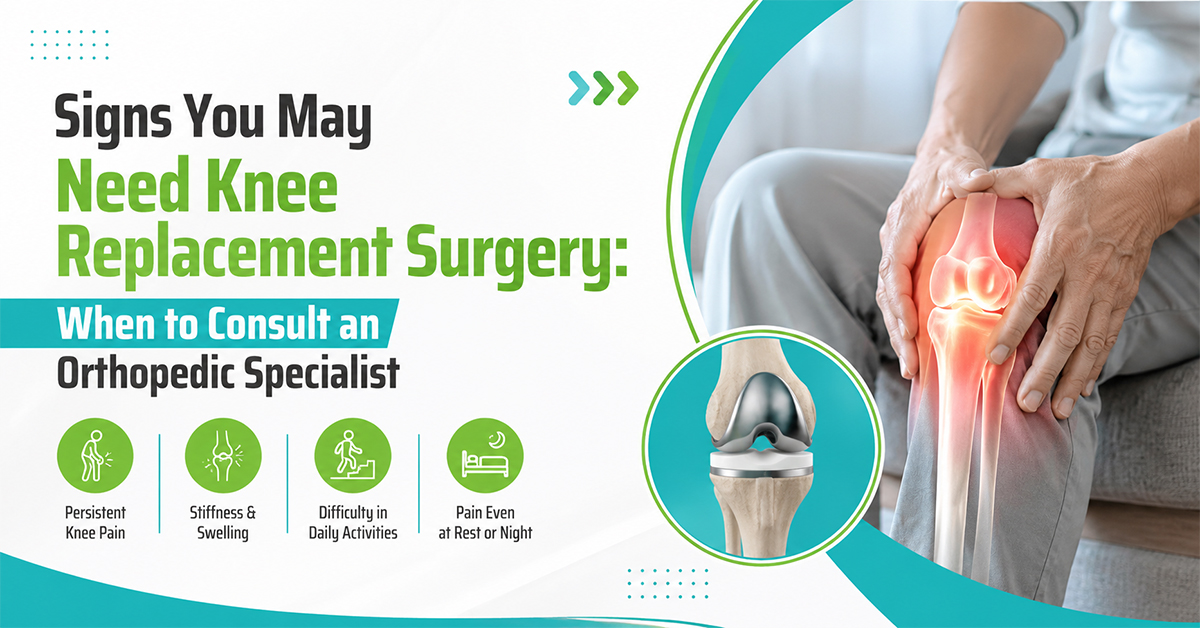
Chronic knee pain has a way of creeping into everything you do. You start skipping walks, avoiding stairs, and planning your day around how far you have to go. At some point, most people with long-term knee problems wonder if knee replacement surgery is the next step, or if there’s still another way to get relief.
If you’ve tried rest, medicines, and basic treatments but your knee still hurts every day, it may be time to look more closely at what’s really going on. Understanding the signs, knowing when to talk to an orthopedic specialist, and learning what modern surgery involves can help you make a calm, informed decision instead of a rushed or fearful one.
What actually happens in knee replacement surgery?
Before you can decide if you might need it, it helps to know what this operation really is and what it is not. In most cases, knee replacement surgery means removing damaged cartilage and a small amount of bone, then covering those areas with smooth metal and high-grade plastic to restore motion and reduce pain.
The goal of a knee replacement is not to give you a “bionic leg” but to reduce pain from worn-out surfaces so you can walk, climb, and sit more comfortably again. Surgeons focus on restoring alignment, balancing the ligaments, and creating a stable joint so everyday movements feel more natural and predictable.
Types of knee replacement procedures
For some people, only one side of the joint is badly damaged, and a partial procedure can be enough. For others, both sides of the joint and the area behind the kneecap are worn out, and that’s where a total knee replacement becomes the recommended option.
The choice of technique depends on your X‑rays, MRI scans in some cases, overall leg alignment, and how severe your symptoms are. A thorough evaluation helps your doctor decide if a more limited option is safe or if a full procedure will give you better long-term function.
Who usually benefits from this surgery?
There’s no single “right” age, but many patients are in their 50s, 60s, or 70s and have tried multiple forms of knee pain treatment without lasting relief. They often describe pain that interrupts sleep, limits basic activities, and makes them feel older than they are.
People who get the most benefit are usually those whose pain clearly comes from advanced joint damage on imaging, who are willing to follow rehab instructions, and who want to stay active rather than slow down year after year.
Key signs your knee problem is more than simple strain
One important red flag is pain most days of the week that’s been present for months or years, even when you’re not very active. Constant aching at rest or sharp pain with simple movements is often a sign that things have progressed beyond a minor injury.
Another warning sign is swelling that keeps returning, or stiffness that makes it hard to fully straighten or bend the joint. People often notice a grinding or catching feeling, and it becomes difficult to kneel, squat, or get up from low chairs without using both arms.
How advanced arthritis changes your knee
As cartilage wears down and bone starts to rub on bone, the joint space on X‑ray narrows, and small bony spurs can form. At this stage, knee arthritis treatment with simple pain tablets, basic exercises, and occasional rest often doesn’t do enough.
Many patients say their world slowly shrinks: they leave the shopping to others, give up their favorite hobbies, or avoid family events because walking or standing is too hard. When this loss of quality of life becomes your new normal, it’s a sign that your knee deserves a more serious look.
When is surgery more likely to be recommended?
Surgeons don’t recommend joint replacement surgery lightly. They usually consider it when X‑rays show severe damage, you’ve tried reasonable non-surgical care, and your symptoms are still strong enough to affect sleep, mood, work, and family life.
It’s especially important to seek expert help if pain medicines are becoming a daily habit, or if injections and other short-term options stop working as well as they once did. At that point, you’re mostly managing around the problem instead of treating it.
How your daily life and goals shape the decision
Doctors look closely at how your knee affects your routine: climbing stairs, getting in and out of a car, standing for cooking, or walking through a market. If each of these tasks feels like a major effort, even simple knee replacement may start to feel worth considering.
Your goals matter too. Some people simply want to walk comfortably and keep up with grandchildren. Others would like to return to light sports or longer walks. Honest conversations about what the operation can and cannot do help you set realistic expectations and avoid disappointment.
Role of specialists, hospitals, and costs
Choosing the right orthopedic surgeon can make a big difference to your confidence and your results. Look for someone who performs a good number of these operations each year, explains things clearly, and answers your questions without rushing.
Where you have your procedure also matters, because a well-equipped knee replacement hospital will usually have modern operating theatres, good infection-control systems, and trained physiotherapy staff to guide your early exercises.
Many people worry about finances and delay asking about the knee replacement cost until their pain is almost unbearable. It’s better to talk openly with the hospital team early, so you understand what’s included, what your insurance covers, and what payment options are available.
Specialist advice is especially useful if you’re considering surgery in combination with other joint problems, because an experienced knee specialist can help you prioritise which issues to address first and how to plan your treatment safely.
What to expect from recovery and life after surgery
People often focus only on the operation itself and forget that success depends heavily on what happens in the weeks after. Once the procedure is done, a well-structured period of knee replacement recovery begins with guided physiotherapy, pain control, and safe walking practice.
Most patients stand with support within a day or two, then gradually move from a walker to a walking stick and, over time, to independent walking. Sticking with your exercise plan, even on days when you feel tired, makes a big difference to strength and confidence.
If you’re anxious about how long you’ll be in hospital, remember that medical teams aim to get you home as soon as it’s safe, while still giving you enough support. Every case is different, but many people are surprised at how quickly they can manage basic tasks again with a little guidance.
Long term, the goal is not just pain relief but a steady return to the activities you value, whether that’s walking around your neighborhood, standing to cook a family meal, or travelling without constant worry about your knee.
Practical steps before you decide on surgery
Before agreeing to any operation, it’s reasonable to ask if all non-surgical options have truly been explored. That can include weight management, targeted strengthening exercises, supportive footwear, and supervised knee pain treatment such as physiotherapy or bracing.
Prepare a list of questions about the operation, anesthesia, expected hospital stay, and possible risks so you don’t forget anything during your consultation. Bringing a trusted family member or friend along often helps you remember the details later, especially on a day when you may be feeling anxious.
It can also help to ask how many similar operations your doctor performs each month and what their complication and infection rates are. Honest numbers give you a clearer picture and help build trust.
Some patients like to speak with others who’ve already gone through the process, to hear real-life stories about pain levels, walking timelines, and what surprised them most about the journey.
Moving forward: making a confident choice about your knee
If ongoing pain, stiffness, and loss of movement are shaping every decision you make, it may be time to ask a specialist whether knee replacement surgery is right for you. The aim isn’t to rush you into an operation, but to give you clear facts so you can weigh the benefits against the risks in a calm, informed way.
Thoughtful planning, the right medical team, and a realistic understanding of recovery can help you get a good outcome and a more active life again, and if you’re looking for personalised guidance on this decision, the orthopedic team at Shyam Hospitals can help you decide whether this step is truly necessary for your situation.