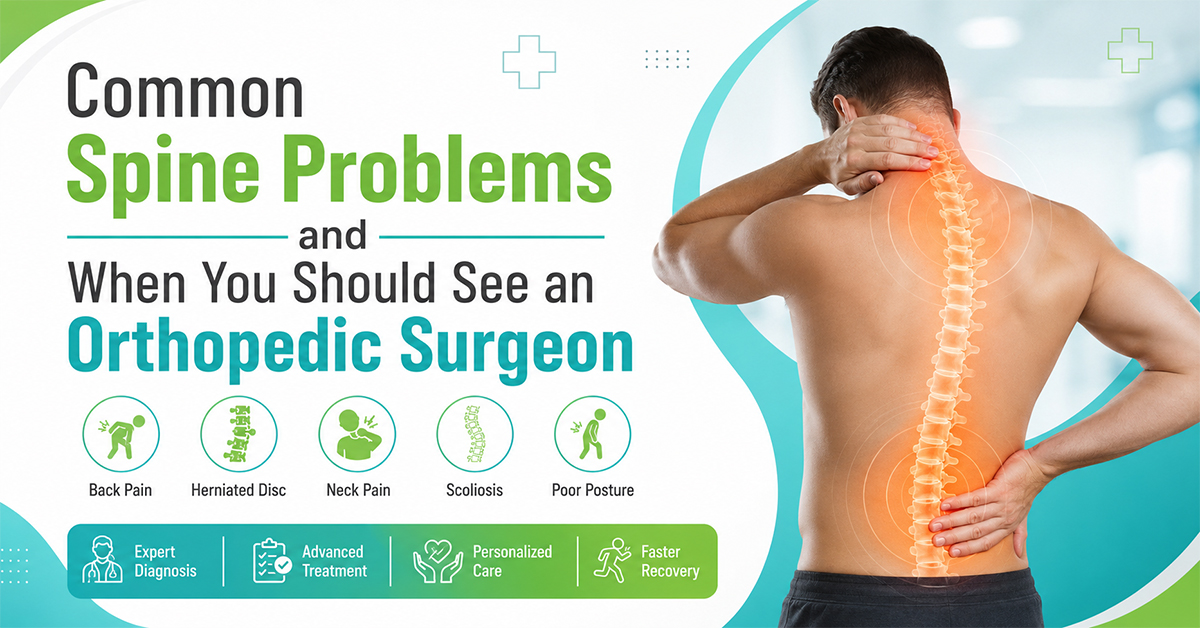
Back and neck pain can quietly take over your day, and most people try home remedies long before they think about proper spine treatment. A few days of rest and painkillers are fine, but some symptoms are warning bells that your spine needs expert attention, not just one more pain relief gel.
If your discomfort keeps returning, spreads to your arms or legs, or starts to affect basic activities like walking, sleeping, or using the toilet, it’s time to stop guessing. Knowing the common spine problems and the red flags that mean you should see an orthopedic surgeon can save you from long-term damage.
Common Spine Disorders That Cause Back And Neck Pain
Most people who visit a clinic with lower back pain assume it is just a muscle strain, but the spine is a complex structure of bones, discs, nerves, and joints. Problems in any of these parts can cause persistent pain and stiffness.
The most common spine disorders seen in Indian outpatient clinics include disc herniation, age-related disc degeneration, spinal stenosis, spondylolisthesis, and vertebral fractures due to osteoporosis or injury.
When Simple Back Pain Treatment Is Enough
Not every episode of backache needs a scan or surgery, and this is where good judgement matters. Simple back pain treatment often works well if the pain started after a specific activity, improves with rest, and does not travel down your arms or legs.
In such cases, doctors usually start with a short course of medication, supervised physiotherapy, posture correction, and core-strengthening exercises, and may review you after one to two weeks.
Signs Your Problem May Need Specific Spine Treatment
Certain symptoms suggest that you need more focused spine treatment rather than only rest and tablets. Pain that has lasted more than four to six weeks, or keeps coming back every few months, should not be ignored.
Other worrying signs include pain that shoots down the leg or arm, tingling or numbness, weakness while lifting the foot or gripping objects, or difficulty standing or walking for more than a few minutes.
When To See A Spine Specialist Urgently
Some symptoms should prompt an immediate visit to a qualified spine specialist, even if you have a busy schedule. One of the most important is new difficulty controlling urine or stool, or a sudden change in bladder habits along with back pain.
Severe pain after a fall, road traffic accident, or heavy lifting injury, especially in older adults or those with known osteoporosis, should also be assessed without delay.
Recognising A Possible Slipped Disc
Many patients with leg pain arrive convinced they have a muscle pull, but the pattern often points to a disc problem. Classic signs that suggest you may need slipped disc treatment include sharp, shooting pain from the back or buttock down to the leg or foot, increased pain on coughing or sneezing, and difficulty bending forward.
Some people notice that one leg feels weaker, or they cannot stand on their toes or heels properly on that side, which suggests that the compressed nerve is affecting muscle strength.
When Slipped Discs Need Surgery
Most slipped discs improve with rest, medicines, and focused physiotherapy over four to six weeks, so surgery is not the first choice for every patient. However, if the pain is unbearable even with strong medication, or if there is ongoing nerve weakness, spinal surgery may be the safest option to prevent permanent damage.
Your surgeon will usually advise an MRI scan, assess your daily function, and discuss both non-surgical and surgical options with you before finalising a treatment plan.
Neck Pain Treatment And Arm Symptoms
Neck pain is often blamed on pillows, mobile phones, or long hours at a desk, which does play a role, but structural issues in the cervical spine can be missed. Early neck pain treatment should focus on posture, ergonomics, and targeted exercises, especially if your work involves long screen time.
If neck pain is joined by tingling, numbness, or weakness in the hand or fingers on one side, or if you frequently drop objects, it may be a sign of nerve compression in the neck that needs medical attention.
Warning Signs In The Arms And Hands
Persistent tingling along a specific finger pattern, burning pain from the neck to the arm, or loss of fine hand movements, such as buttoning clothes, can point towards cervical spine issues. People sometimes assume it is only a vitamin deficiency and delay seeing a doctor.
Ignoring these symptoms for months can allow permanent nerve damage, so any arm weakness or changing sensation linked with neck pain should be checked by an orthopedic spine surgeon.
When Do You Really Need Spinal Surgery?
The word “surgery” naturally worries most families, and many patients arrive determined to avoid it at any cost. Experienced surgeons are just as cautious, and spinal surgery is generally reserved for specific situations where conservative care has clearly failed.
Strong indications include progressive weakness, serious difficulty walking, loss of bladder or bowel control, severe narrowing of the spinal canal, or unstable fractures; in these cases, waiting too long can lead to disability.
Choosing The Right Orthopedic Spine Surgeon
Once you are advised surgery, choosing your doctor becomes as important as the procedure itself. Look for an orthopedic spine surgeon who performs these operations regularly, explains the condition clearly, and is open about expected recovery time, success rates, and possible complications.
In India, many patients also compare costs between a corporate hospital and a dedicated spine hospital, and it helps to ask about package estimates, length of stay, and post-surgery physiotherapy requirements before you decide.
How To Care For Your Spine Daily
Good spine care is not only about treatment once something goes wrong; it is about the small habits that protect your back and neck over decades. Simple changes such as avoiding sudden heavy lifting, keeping a healthy weight, and training your core muscles can significantly reduce repeated pain episodes.
Office workers should check screen height, chair support, and break frequency, while homemakers and labourers benefit from safe lifting techniques and avoiding twisting with a loaded spine.
Conclusion
Spine problems do not always mean surgery, but ongoing pain, weakness, or bladder changes are signals you cannot ignore. Recognising these warning signs early and seeking the right spine treatment from a qualified specialist can prevent long-term disability and help you return to your usual routine sooner.
If back or neck symptoms are limiting your daily life, book an appointment with a trusted orthopedic doctor or spine clinic near you, discuss your concerns openly, and ask for a clear plan instead of living with guesswork; centres such as Shyam Hospitals can guide you through diagnosis and treatment options step by step.