
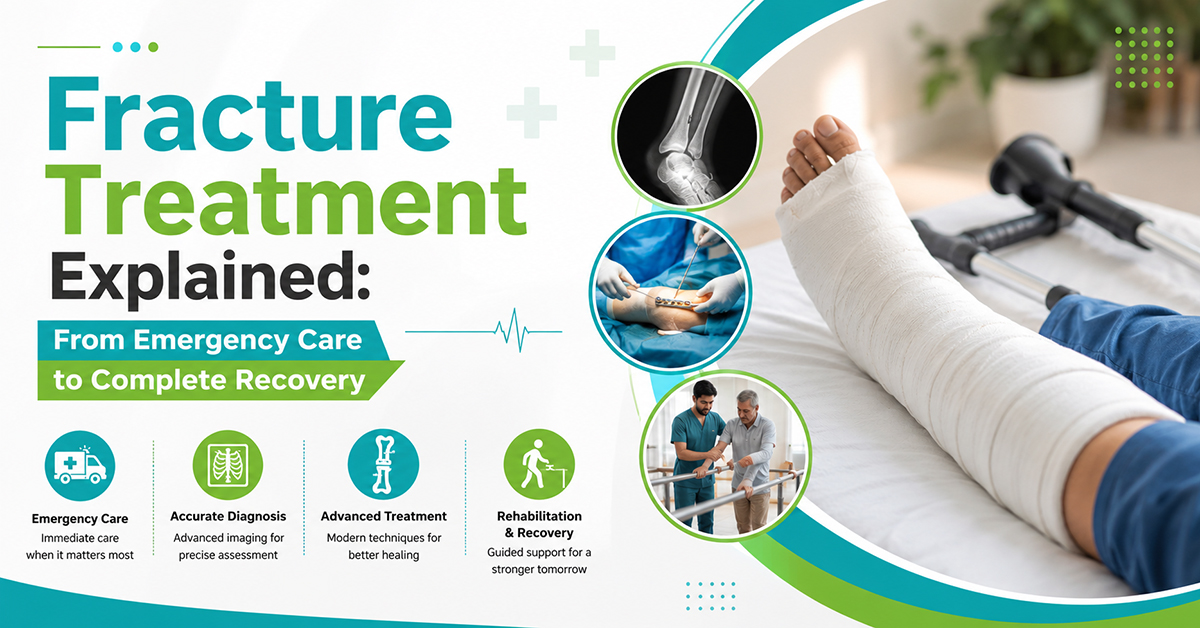
A broken bone throws life off balance in a second. One awkward fall or road accident and suddenly you're in pain, in shock, and trying to figure out what fracture treatment really involves and how long it will take to get back on your feet.
If you're searching for clear, honest guidance, you're in the right place. This guide walks you through what happens from the moment a fracture is suspected, through hospital care, surgery when needed, and the long stretch of recovery at home, so you know what to expect and what you can do to heal well.
What actually happens during fracture treatment in the first few hours?
The first step is recognising that a serious bone injury might be more than a simple sprain. Severe pain, visible deformity, trouble moving a limb, or hearing a crack at the time of injury are strong signs that you may need urgent bone fracture treatment rather than just rest and ice.
In an emergency setting, the medical team focuses on stabilising your condition before anything else. They check vital signs, control bleeding, support the injured limb, and quickly decide whether you need imaging such as X-rays or CT scans to confirm the type and location of the fracture.
Emergency trauma care and initial stabilisation
If you arrive after a major accident, you'll often be assessed under standard trauma care protocols. That means the team looks for life-threatening problems with breathing, the spine, or internal bleeding before they focus on the broken bone.
Once you're stable, the injured area is carefully examined for open wounds, nerve damage, and circulation problems, because early assessment can prevent long-term complications in orthopedic trauma cases.
Pain relief and temporary support
Good fracture management always includes early pain control. This might involve tablets, injections, or regional nerve blocks so you can tolerate movement and imaging without overwhelming discomfort.
The limb is usually supported with a splint, sling, or temporary cast to keep the bone as still as possible, which helps protect soft tissues and sets the stage for the next steps in broken bone treatment.
How do doctors decide between casting and fracture surgery?
Not every break needs an operation, but not every break can heal properly in a cast either. The decision starts with a careful review of X-rays to see how far the bone ends have shifted, how many pieces there are, and whether the joint line is involved.
Non-surgical care is more likely when bones are well aligned, the fracture is stable, and there is good blood supply to the area. In these cases, a plaster or fibreglass cast or a firm brace may hold the bone steady while natural fracture healing takes place.
When surgery becomes the safer option
Some patterns simply won't heal correctly without fracture surgery, especially when the bone is badly displaced, the skin is open, or the break extends into a major joint like the hip, knee, or wrist.
In surgical treatment, the surgeon may use metal plates, screws, rods, or wires to hold the pieces in the correct position, which can allow earlier movement and reduce the risk of long-term stiffness or deformity after bone injury treatment.
The role of the fracture specialist
Complex injuries are usually managed by a trained fracture specialist who focuses on broken bones, joint reconstruction, and limb alignment rather than general orthopaedic problems.
This specialist weighs your age, activity level, job demands, and any medical conditions before recommending a plan, so the final approach to bone fracture treatment matches both the injury and your lifestyle.
Inside the orthopedic hospital: what to expect during your stay
Once the emergency is over, the setting shifts from the chaos of the ambulance bay to the more structured environment of an orthopedic hospital, where imaging, surgery, and rehabilitation teams work together.
You may have repeat X-rays, blood tests, and sometimes advanced scans, because a clear picture of the injury helps the team plan safe, efficient fracture treatment rather than rushing into the wrong procedure.
Team-based care for complex fractures
Significant injuries often involve more than one body system, so the orthopaedic team may coordinate with physiotherapists, anaesthetists, and sometimes vascular surgeons who all play a role in orthopedic trauma care.
Daily ward rounds give you a chance to ask questions about timelines, weight-bearing limits, and the likely length of stay, which helps you plan for work, family help, and transport after bone injury treatment in hospital.
Nurses keep a close eye on swelling, wound drainage, and pain control after surgery. If you have a cast instead of an operation, they'll check that your fingers or toes remain warm, mobile, and well perfused, because changes here can be an early warning sign of problems with fracture healing.
Before discharge, you'll be given clear instructions on medications, wound care, and follow-up appointments, plus an early introduction to exercises that support safe fracture recovery at home.
How does fracture healing really work over weeks and months?
Once the bone has been aligned and stabilised, your body starts a predictable but slow repair process. In the early days, blood clots around the break and a soft tissue callus forms, which is why too much movement in this stage can disrupt fracture healing.
Over the next several weeks, that soft callus gradually hardens into new bone. On X-rays it often looks cloudy or fuzzy at first, then slowly becomes more solid as your broken bone treatment plan continues with regular reviews and repeat imaging.
Typical milestones during fracture recovery
While every injury is different, most people follow a similar pattern, moving from pain at rest to pain only with movement, then gradually back towards normal function.
Follow-up visits usually line up with key stages of bone injury treatment, where doctors check alignment, adjust casts or braces, and update your weight-bearing status based on how solid the new bone appears.
A simple timeline might look like this, though your surgeon may give different estimates:
- First 1–2 weeks: swelling and bruising start to settle; pain becomes easier to control.
- Weeks 3–6: early new bone forms; many casts are changed or loosened as swelling drops.
- Weeks 6–12: most everyday fractures are solid enough for light use and guided exercise.
- Several months: strength, balance, and confidence gradually return with ongoing rehab.
Smoking, poorly controlled diabetes, and ignoring weight-bearing limits can all slow this process, while good nutrition, sleep, and steady home exercises usually support smoother fracture recovery.
Rehabilitation and daily life: practical steps to support your fracture treatment
Once the bone is stable, rehab becomes just as important as the original hospital care, because stiff joints and weak muscles can limit you long after the fracture itself has healed.
Physiotherapists often break rehab into stages, starting with gentle range-of-motion work, adding light strengthening, then building towards balance and impact activities that match your usual level of sport or work-related orthopedic trauma risk.
Daily routines matter more than people expect. Simple habits such as keeping the limb elevated, doing your prescribed exercises twice a day, and using walking aids correctly can change the whole course of bone fracture treatment.
At home, it helps to rearrange your space: keep essentials at waist height, remove loose rugs, and ask for help with heavy lifting, especially in the first weeks of bone injury treatment when re-injury is a real concern.
Good rehab also includes the mental side. Many patients feel anxious about returning to driving, sport, or even crowded public spaces after hospital-based trauma care, so honest conversations with your therapist or surgeon can help rebuild confidence alongside physical strength.
The bottom line: healing well after fracture treatment
A broken bone doesn't have to mean a lifetime of problems, but it does demand respect for the process. Quick emergency action, timely imaging, and a clear plan for casting or surgery set the foundation, and steady rehabilitation keeps you moving towards full function as fracture treatment continues at home and in clinic.
If you're dealing with a fresh injury or a slow-healing fracture, don't try to guess your way through it; seek prompt assessment, ask direct questions, and stay engaged with your care team so you can return safely to work, family life, and the activities you enjoy, with support from Shyam Hospitals when you need expert guidance.